






Bladder Cancer Treatment
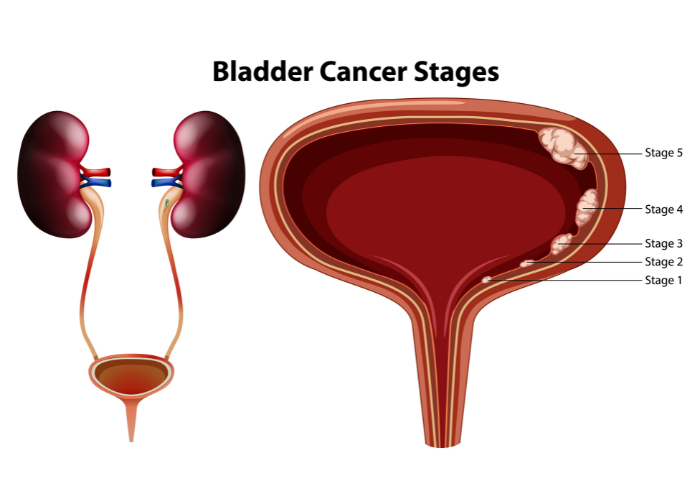
The bladder is in charge of getting rid of waste. If infected with cancer, the effects can seriously interfere with day-to-day activities. When rogue cells begin to multiply unchecked in the bladder wall or lining, it results in bladder cancer. Urine retention and release may change as a result. Dr. Harish Ravoori, Best Bladder Cancer Specialist in Khammam, provides advanced diagnosis and personalized treatment for bladder cancer.
Bladder cancer is a condition in which abnormal cells develop in the lining of the urinary bladder, the organ responsible for storing urine. It most commonly begins in the inner lining (urothelium) and may remain superficial or progress deeper into the bladder wall. Early-stage bladder cancer is often highly treatable, especially when detected promptly. Common warning signs include blood in the urine (painless hematuria), frequent urination, urgency, burning during urination, and pelvic discomfort. Risk factors include smoking, exposure to certain industrial chemicals, chronic bladder irritation, increasing age, and a family history of bladder cancer.
Diagnostic Procedures for Bladder Cancer
Early and accurate diagnosis is the first and most critical step in managing bladder cancer. Urologists typically begin by evaluating patient history and symptoms, followed by a combination of non-invasive and invasive diagnostic tools, with comprehensive care and treatment guidance provided by Dr. Harish Ravoori, Best Cancer Treatment Specialist in Khammam.
Common diagnostic procedures include:
1. Urine Cytology – A lab test to detect cancer cells in the urine.
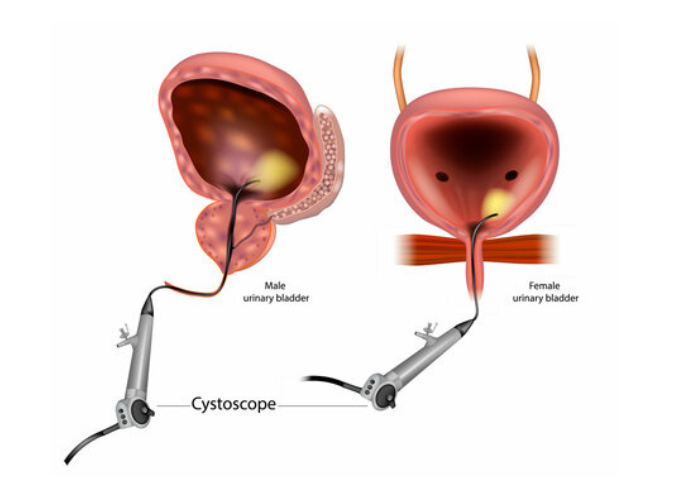
2. Cystoscopy – A thin tube with a camera is inserted into the bladder to examine its interior.
3. Biopsy – During cystoscopy, a tissue sample may be taken to confirm the diagnosis.
4. Imaging Tests – CT urograms, MRI scans, and ultrasounds help assess the bladder wall and surrounding organs.
Treatment Options for Bladder Cancer
Treatment for bladder cancer depends on the stage, grade, and patient’s overall health, and can range from minimally invasive procedures to more complex therapies, ensuring a personalized approach for each patient. Dr. Harish Ravoori, provides advanced and comprehensive bladder cancer treatment options tailored to individual needs.
1. Transurethral Resection of Bladder Tumor (TURBT):
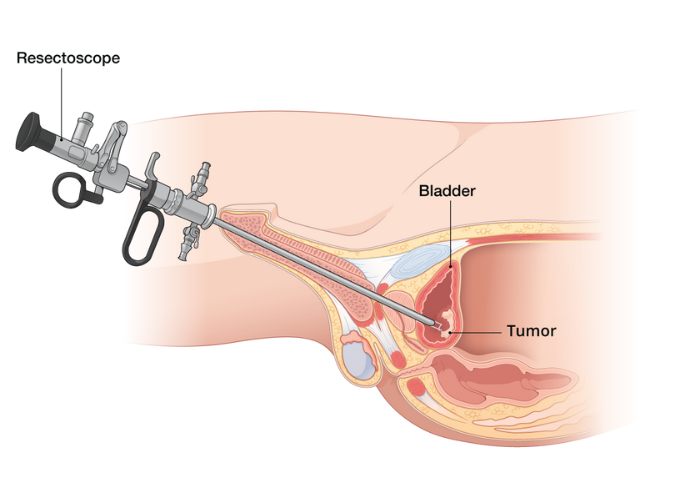
Commonly used for early-stage tumors, TURBT involves removing cancerous tissue via the urethra using a resectoscope.
2. Intravesical Therapy – BCG Treatment for Bladder Cancer:
BCG (Bacillus Calmette-Guerin) is an immunotherapy used to prevent recurrence in non-muscle-invasive bladder cancer. It is introduced directly into the bladder, stimulating the immune system to attack cancer cells.
3. Radical Cystectomy:
In cases where the tumor has invaded muscle or spread, full bladder removal may be required, often accompanied by urinary reconstruction.
4. Chemotherapy and Radiation Therapy:
Used either before surgery to shrink tumors (neoadjuvant) or after (adjuvant), chemotherapy can be administered orally or intravenously. Radiation may be used alone or in combination.
5. Targeted and Immunotherapies:
For advanced cancers, newer treatment modalities offer promising results with fewer side effects, especially for patients not responding to traditional treatments.
Stages of Bladder Cancer
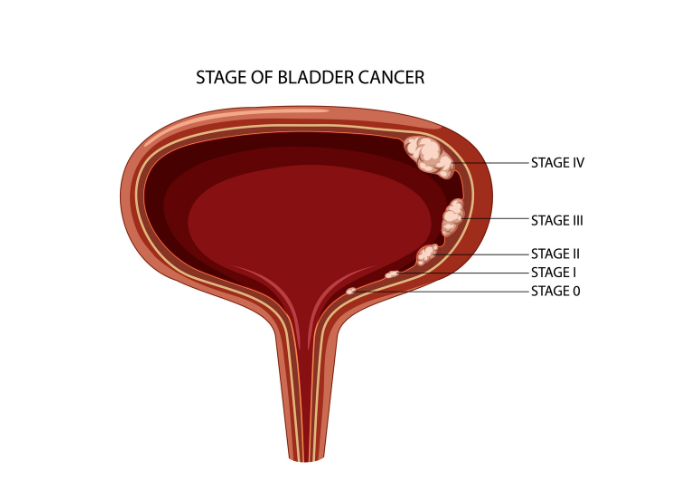
Bladder cancer progresses in well-defined stages, which helps determine the best approach to care and allows Dr. Harish Ravoori, to provide precise, stage-based and personalized treatment planning.
1. Stage 0 (Carcinoma in situ): Cancer is limited to the bladder’s inner lining.
2. Stage I: Tumor has affected the connective tissue under the lining but not the muscle layer.
3. Stage II: Cancer has spread into the muscle of the bladder wall.
4. Stage III: Tumor has grown into surrounding tissues or organs.
5. Stage IV: Cancer has metastasized to distant parts of the body such as lymph nodes, bones, or lungs.
Frequently asked questions
Yes, particularly if diagnosed early. Most patients with low-grade or non-invasive tumors are cured with treatment and follow-up.
The most frequent symptom is blood in urine (hematuria), which is usually painless. Difficulty urinating or frequent urination are other presenting symptoms.
BCG treatment typically spans 6 weekly instillations, followed by maintenance doses over several months. Your urologist may adjust the duration based on response and recurrence risk.
Bladder cancer has a fairly high rate of recurrence, underlining the necessity for ongoing surveillance. Follow-up and investigations must be regular, even after effective treatment.